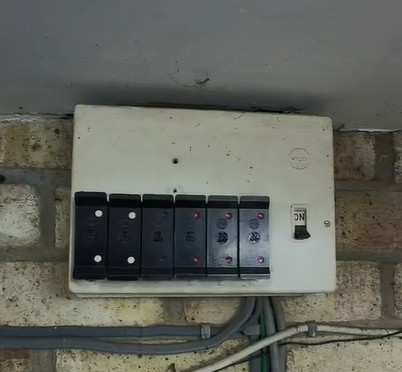
At L J Mullan Electrical, I recently completed a consumer unit upgrade in Banbury, replacing an older Wylex fuse board that was fitted with traditional rewireable fuses.
Whilst these older fuse boards were common in UK homes for many years, electrical safety standards have moved on considerably. Modern consumer units now provide significantly greater protection against electric shock, electrical fires and damage to expensive household appliances.
Why Was the Consumer Unit Upgraded?
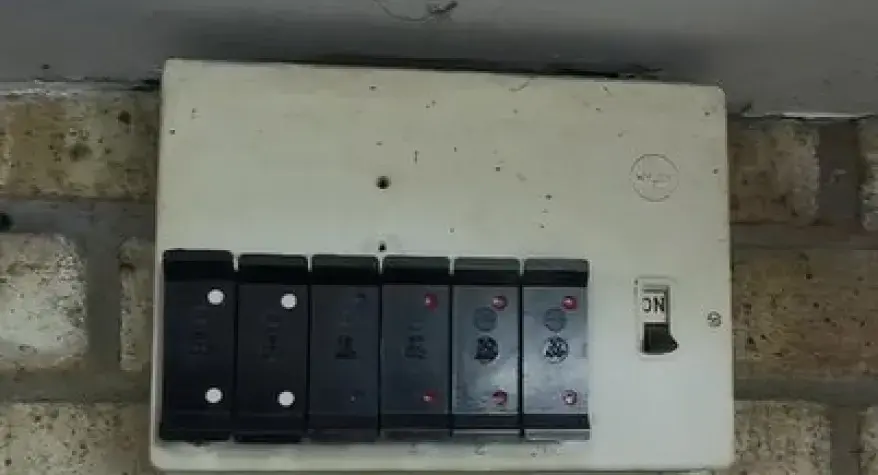
The existing Wylex fuse board relied on rewireable fuse carriers and offered no additional protection in the form of 30mA RCBOs or surge protection.
Although many older fuse boards may still function correctly, they do not offer the same level of safety as modern installations.
When a fault occurs on an electrical circuit, modern protective devices are designed to disconnect the supply much faster and more accurately than traditional rewireable fuses, helping to reduce the risk of injury and property damage.
Following a discussion with the customer, we agreed that a consumer unit upgrade would provide improved protection and bring the installation more in line with current electrical standards.
The Difference Between Rewireable Fuses and Modern RCBOs
One of the biggest differences between older fuse boards and modern consumer units is how faults are detected and disconnected.
Traditional rewireable fuses contain a thin piece of fuse wire which melts when excessive current flows through the circuit. Whilst effective for basic overload protection, they are relatively slow compared to modern devices and offer no protection against electric shock.
The new consumer unit installed on this project uses individual RCBOs (Residual Current Breaker with Overcurrent Protection) for every circuit.
These devices provide protection against:
- Overloads
- Short circuits
- Earth leakage faults
- Electric shock risks
An additional benefit of RCBO protection is that a fault on one circuit only affects that specific circuit rather than disconnecting large areas of the property.
This improved fault discrimination can be particularly useful in modern homes where power is relied upon for work, internet access, security systems and refrigeration.
Why We Now Install Type A RCBOs
A question I am frequently asked by homeowners is why modern consumer units now use Type A RCBOs instead of the older Type AC devices.
The answer is simple – modern electrical equipment has changed.
Many homes now contain:
- EV chargers
- Washing machines
- Tumble dryers
- Induction hobs
- LED lighting
- Heat pumps
- Computers and electronic power supplies
These devices can generate pulsating DC residual currents during fault conditions.
Type AC protective devices are designed to detect alternating current (AC) faults only, whereas Type A devices can detect both AC and pulsating DC residual currents.
Because modern homes contain increasing amounts of electronic equipment, Type A devices provide a higher level of protection and are now considered the preferred solution for most domestic installations.
For this reason, the new consumer unit was fitted with Type A RCBO protection throughout.
Surge Protection Installed as Standard
Another significant improvement on this installation was the addition of a Type 2 Surge Protection Device (SPD).
Many homeowners are unaware that transient overvoltages occur regularly on electrical networks.
These can be caused by:
- Lightning activity
- Utility switching operations
- Faults within the electricity network
- Large electrical loads switching on and off
Whilst these surges may only last fractions of a second, they can cause damage to sensitive electronic equipment.
Modern homes often contain thousands of pounds worth of electronics including televisions, gaming consoles, computers, broadband equipment, smart home devices and kitchen appliances.
A Type 2 SPD helps reduce the impact of these transient overvoltages and is now commonly installed as part of consumer unit upgrades to comply with current wiring regulations.
Overcoming Installation Challenges
Like many fuse board replacements, this installation presented a few challenges.
Over the years, additional circuits had been added and cables were entering the existing fuse board from multiple directions. Some of the conductors were also particularly short, leaving very little room to work with.
To achieve the best possible result, I installed a FuseBox spacer frame which provides additional space behind the consumer unit. This allows cables to be routed more effectively whilst reducing strain on terminations.
Whilst customers rarely see the wiring hidden behind the front cover, taking the time to organise and dress cables correctly is an important part of delivering a professional installation.
Even when faced with awkward cable entries and limited conductor lengths, I always aim to leave every consumer unit as neat, organised and accessible as possible.
Looking for a Consumer Unit Upgrade in Banbury?
If your property still has an older Wylex fuse board, rewireable fuses, or an outdated consumer unit without RCBO protection and surge protection, it may be worth considering an upgrade.
At L J Mullan Electrical, I carry out consumer unit replacements throughout Banbury, Brackley, King’s Sutton, Adderbury, Bloxham, Bodicote and the surrounding villages.
Every installation includes full testing, certification and notification where required, giving you confidence that your electrical installation is protected by modern safety devices.
If you’d like advice on whether your consumer unit should be upgraded, feel free to get in touch for friendly, honest guidance and a no-obligation quotation.